
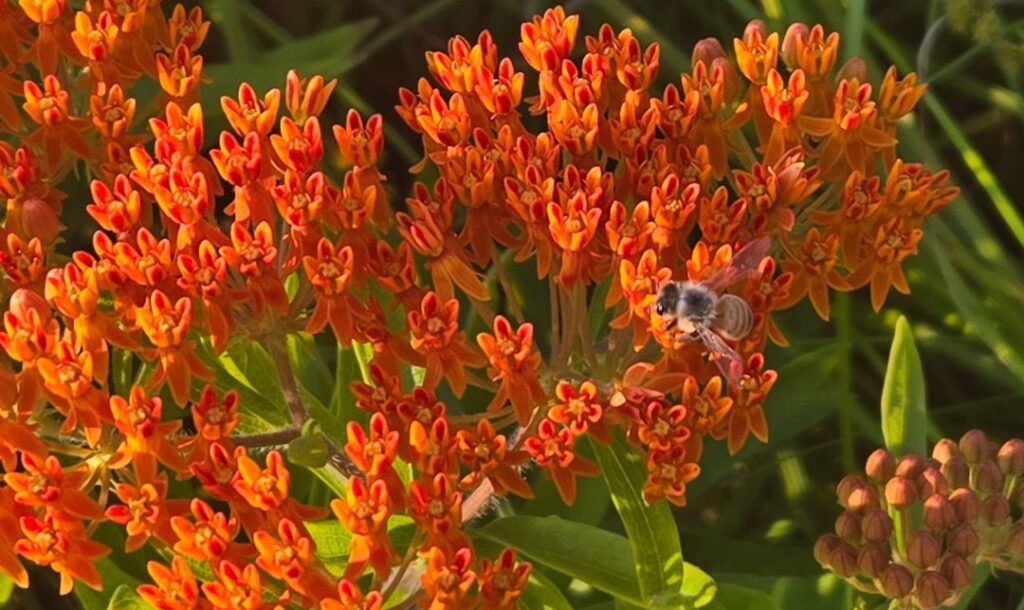
Looking to refresh your yard or garden this spring? Want to bring beautiful colors into your yard? Ready to attract beautiful songbirds and butterflies? Time to go native! Michigan’s native plants aren’t just beautiful—they’re also hard-working plants that support our environment, save you time and money, and bring life back to your landscape.
Here’s why planting native is one of the best choices you can make:
🌱 Native Plants Are Low Maintenance
Michigan’s native plants are naturally adapted to our region’s soil, rainfall, and climate. That means they require less watering, no fertilizer, and minimal care once established (just remember–low care does not mean no care 🙂). Whatever sun you have, water level, or soil type–there’s a native plant fit for your yard.
🐝 They Support Pollinators and Wildlife
Want to help our butterflies, bees, and birds thrive? Native plants provide the nectar, seeds, and shelter that local wildlife depends on. Species like milkweed (essential for monarch butterflies) or wild bergamot (a favorite of native bees) are more than just pretty—they’re crucial for ecosystem health. Planting natives in your yard also helps their seeds spread into other parts of the community!
💧 Native Plants Improve Water Quality
With their deep root systems, many native plants help prevent erosion, absorb stormwater, and reduce runoff. This means cleaner local waterways and less flooding. Planting native is an easy way to make a big impact on your Rouge River!
🌼 They’re Beautiful—All Year Long
From the cheerful yellow of black-eyed Susans that bloom in the summer, to the beautiful red-osier dogwood coloring the snow, native plants provide year-round beauty and texture. Many even bloom in succession, giving you color from spring through fall. Not sure how to do this? Hire us for a consultation!
Uncomfortable using native plants? Here’s how to do it.
Messy ecosystem, orderly frame.
You’re probably concerned that native plants look messy. Certainly, some do. The garden to the left features Fox Sedge (Carex vulpinoidea) and Red Maple (Acer rubrum), both native species. The garden works despite the the disheveled sedge for a couple reasons:
- The wild sedge is framed by an orderly design. The linear tree planting and contrasting boulders and stones effectively counterbalance the sedge.
- Use of few species also contributes to a sense of order.
The stronger and cleaner that you frame a native plant garden, the messier the plants can be and still look great to most people.
Framing your Native Plants
The “frame” that your neighbors will find most acceptable is one that looks like other gardens in the neighborhood. People tend to want neighborhood landscapes to look uniform. Look around. What do gardens tend to look like in your community? Below are a few common “frames” that you might keep an eye out for.
- Evergreen hedges, like the boxwood pictured to the right.
- Boulders and rockwork
- Attractive use of mulch.
- Clean and well maintained lawn borders
- Fencing and other landscape hardscapes
Focal points
Careful attention to creating strong focal points strongly affects how people respond to gardens. Most people don’t know or recognize plants. They will pay most attention to the focal plant or object that you’ve arranged.
Structure
A common mistake with rain gardens and native plants is to select plants that look good only in one season. Evergreens, other woody plants, rocks, and walls provide year-round structure to help gardens look good in winter. Bunch grasses similarly often provide great structure in winter time, standing up to snow to maintain form.
Categories
-
 BlogRead the latest blog posts from your FOTR team.