
Advocating for the River
This page serves as a clearinghouse for the Advocacy and Lobbying work Friends of the Rouge is doing as an organization.
We encourage community members to reach out if they have any concerns about happenings in the watershed that might impact the Rouge. Reach us by calling our offices: 734-927-4900 or emailing friends@therouge.org.
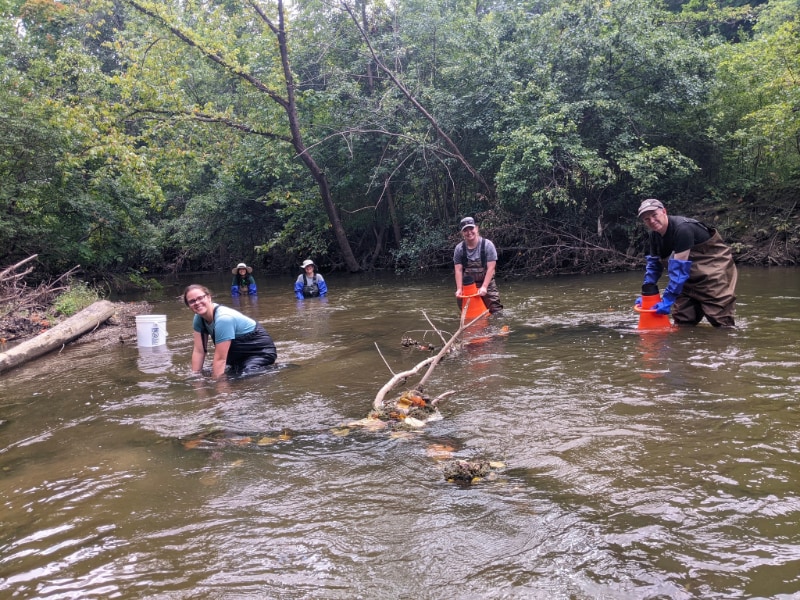
Advocacy and Policy Priorities for the Rouge River Watershed
Addressing Urbanization and Development Impacts
Promote Green Infrastructure: Advocate for policies that require or incentivize green stormwater infrastructure (e.g., rain gardens, permeable pavement, green roofs) in new developments and retrofits to reduce runoff and pollutant loads.
Land Conservation and Protection: Support land use planning that minimizes impervious surface expansion and protects existing natural areas, wetlands, and riparian buffers.
Zoning Reform: Push for municipal zoning ordinances that prioritize watershed health, such as conservation overlays and open space requirements.
Equitable Access: Acknowledging legacy decisions and actions that disconnected communities from the Rouge River, advocate for building and increasing access to the Rouge River and green spaces across the watershed.
Reducing Non-Point Source Pollution
Stormwater Management Regulations: Strengthen stormwater permitting and enforcement for municipalities and large landowners, focusing on reducing runoff from roads, lawns, and parking lots.
Public Education Campaigns: Support outreach efforts to reduce lawn fertilizer use, improve pet waste management, and encourage responsible landscaping practices among residents and businesses.
Watershed-Based Permitting: Advocate for integrated, watershed-scale approaches to Clean Water Act permitting to more effectively address diffuse pollution sources.
Responding to Emerging Contaminants
Monitoring and Data Collection: Push for increased funding and coordination among agencies to monitor contaminants such as sodium chloride, E. coli, PFAS, pharmaceuticals, and microplastics in the Rouge River and its tributaries.
Pollution Prevention Policies: Support legislation that restricts or bans high-risk emerging contaminants at the source, such as limiting PFAS in consumer products and industrial discharges.
Public Health Protections: Advocate for stronger health advisories and cleanup plans for contaminated fish and water bodies. Advocate for stronger systems to identify, track, and mitigate illicit discharges into waterways.
Adapting to Climate Change
Watershed Resilience Planning: Promote climate-adaptive strategies in watershed plans, such as floodplain reconnection, wetland restoration, and heat island mitigation.Learn more and see the news coverage Here
Infrastructure Investment: Advocate for federal and state funding to update stormwater, sewer, and road infrastructure to withstand increased storm intensity and frequency.
Equity-Focused Adaptation: Ensure climate resilience policies prioritize vulnerable communities most impacted by flooding, pollution, and heat.
Managing Sanitary and Combined Sewer Overflows (SSOs and CSOs)
Infrastructure Upgrades: Support accelerated investment in separating combined sewers and expanding storage/treatment capacity for overflows.
Performance Standards: Advocate for stricter enforcement of discharge limits and mandatory overflow reporting and public notification.
Green/Gray Integration: Promote blended solutions that combine traditional infrastructure with nature-based solutions such as green stormwater management to reduce system burden.
Controlling Invasive Species
Rapid Response and Management Plans: Support funding and coordination for invasive species detection, rapid response, and long-term management, especially for aquatic and riparian invaders like Phragmites, Japanese knotweed, European frogbit, and quagga and zebra mussels.
Native Habitat Restoration: Promote restoration projects that reintroduce native species and improve ecological resilience across the watershed.
Public Engagement and Prevention: Encourage educational initiatives and volunteer stewardship to reduce spread and increase local involvement in invasive species control.
For Elected Officials:
Interested in contacting your elected official?
2026 State House Representatives
2026 State Senate
| District | First Name | Last Name | Website |
|---|---|---|---|
| 1 | Erika | Geiss | https://senatedems.com/geiss/ |
| 2 | Sylvia | Santana | https://senatedems.com/santana/ |
| 4 | Darrin | Camilleri | https://senatedems.com/camilleri/ |
| 5 | Dayna | Polehanki | https://senatedems.com/polehanki/ |
| 6 | Mary | Cavanagh | https://senatedems.com/cavanagh/ |
| 7 | Jeremy | Moss | https://senatedems.com/moss/ |
| 8 | Mallory | McMorrow | https://senatedems.com/mcmorrow/ |
| 9 | Michael | Webber | https://www.senatormichaelwebber.com/ |
| 13 | Rosemary | Bayer | https://senatedems.com/bayer/ |
| 14 | Sue | Shink | https://senatedems.com/shink/ |
| 15 | Jeff | Irwin | https://senatedems.com/irwin/ |
| 23 | Jim | Runestad | https://www.senatorjimrunestad.com/ |
2026 US House of Representatives
| District | First Name | Last Name | Website |
|---|---|---|---|
| 6 | Debbie | Dingell | https://debbiedingell.house.gov |
| 7 | Tom | Barrett | https://barrett.house.gov |
| 10 | John | James | https://james.house.gov |
| 11 | Haley | Stevens | https://stevens.house.gov |
| 12 | Rashida | Tlaib | https://tlaib.house.gov |
| 13 | Shri | Thanedar | https://thanedar.house.gov |
2026 US Senate
| First Name | Last Name | Website |
|---|---|---|
| Elissa | Slotkin | https://slotkin.senate.gov |
| Gary | Peters | https://peters.senate.gov |